
Dangerous Goods Regulations (DGR) training certified by the Directorate General of Civil Aviation (DGCA) is a mandatory qualification in India for handling, packing, loading, and transporting hazardous materials by air. Under DGCA Civil Aviation Requirements (CAR) Section 1, Series M, Part I, any aviation personnel involved in the air cargo supply chain must undergo initial and recurrent DGCA DGR training in India to ensure safe flight operations and compliance with international standards set by the International Civil Aviation Organization (ICAO) and the International Air Transport Association (IATA).
What is DGCA DGR Training?
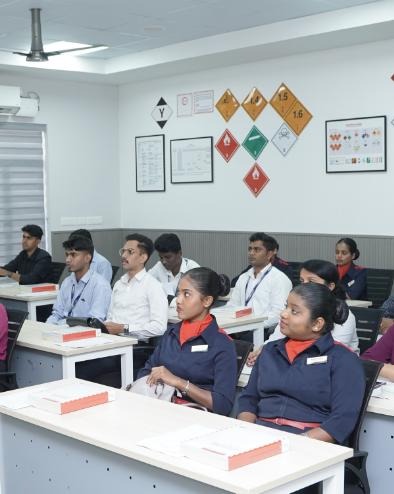
DGCA DGR training is a structured, regulatory compliance course that equips aviation, logistics, and supply chain professionals with the skill set to identify, classify, mark, label, document, and handle hazardous materials intended for air transport.
From lithium batteries and infectious substances to flammable liquids and radioactive material, dangerous goods pose severe risks to aircraft airworthiness and passenger safety if misdeclared or improperly packaged. Obtaining certified DGCA DGR training in India ensures that personnel adhere strictly to the Dangerous Goods Regulations manual, minimizing the risk of inflight emergencies or cargo rejections.
Mandatory Categories for DGCA DGR Certification
Under the Competency-Based Training and Assessment (CBTA) framework established by IATA and enforced by the DGCA, DGR training is categorized based on specific job functions within the aviation ecosystem:
| CBTA Category / Function | Target Audience | Primary Responsibilities |
| Class 1 / Function 7.1 | Shippers & Cargo Packers | Classifying, packaging, marking, and labeling hazardous cargo. |
| Class 2 / Function 7.2 | Freight Forwarders & Cargo Agents | Processing and consolidating dangerous goods shipments. |
| Class 3 / Function 7.3 | Airline Cargo Acceptance Staff | Verifying Shipper’s Declarations and inspecting packages via acceptance checklists. |
| Class 4 / Function 7.4 | Ramp & Ground Handling Personnel | Storage, loading, securing, and physical handling of hazardous goods on aircraft. |
| Class 5 / Function 7.5 | Flight Crew & Load Planners | Pilot-in-Command notification (NOTOC), flight deck safety, and inflight emergency procedures. |
| Class 6 / Function 7.6 | Passenger Check-In & Cabin Crew | Identifying hidden dangerous goods in passenger baggage and handling cabin incidents. |
Why DGCA DGR Training in India is Essential for Aviation Professionals
Completing accredited DGCA DGR training in India opens key career pathways across airlines, ground handling agencies (GHAs), express courier firms, freight forwarding companies, and manufacturing enterprises.
Key Benefits of DGR Certification:
- Regulatory Compliance: Fulfills Indian aviation law requirements mandated by the Aircraft Rules, 1937, and DGCA CARs.
- Global Mobility: Certification aligns with IATA DGR standards, making skills applicable globally.
- Enhanced Employability: Required credential for cargo operations officers, ramp managers, compliance auditors, and logistics specialists.
- Safety Mitigation: Prevents catastrophic inflight events caused by undeclared or improperly stowed hazardous cargo.
Eligibility Criteria & Course Duration
To enroll in DGCA-approved DGR training courses in India, candidates must meet the following baseline requirements:
- Educational Qualification: 10+2 standard (Higher Secondary) from a recognized board for entry-level functional roles; graduation preferred for supervisory cargo positions.
- Language Proficiency: Functional command of written and spoken English, as technical manuals and documentation are published in English.
- Course Duration:
- Initial Training: 5 days (30 to 35 instructional hours) covering complete theoretical foundations, manual usage, and practical exercises.
- Recurrent Training: 3 days (18 to 20 instructional hours). Must be taken every 24 months to maintain valid certification.
Step-by-Step Pathway to DGR Certification in India
1. Training Academy Selection
Choose an institute authorized by the DGCA and accredited by IATA to deliver Dangerous Goods Regulations instruction. Verify that the center provides updated annual editions of the IATA DGR manual.
2. Instruction & Practical Exercises
The course covers hazard identification, UN numbers, packing instructions, state and operator variations, limited/excepted quantities, and complete handling of the Shipper’s Declaration for Dangerous Goods.
3. Examination & Passing Criteria
Candidates complete a comprehensive written or digital examination assessing practical navigation of the DGR manual. A minimum passing grade of 80% is required to earn certification.
Related Search Questions
What is the validity period of a DGCA DGR certificate?
A DGCA DGR certificate is valid for 24 months (2 years) from the date of issuance. Personnel must complete recurrent training prior to the expiry date to retain active handling credentials.
Can I complete DGCA DGR training online in India?
Yes, DGCA allows virtual instructor-led training (VILT) and blended learning options offered by approved institutions, provided exams adhere to invigilated assessment protocols.
What happens if my DGR certification expires?
If your DGR certification lapses beyond the grace period defined by DGCA guidelines, you must retake the complete Initial Training course rather than the shorter recurrent program.
Is IATA DGR certification recognized by DGCA in India?
Yes, DGCA recognizes IATA DGR certification, provided the training program complies with DGCA Civil Aviation Requirements (CAR) and is delivered by an authorized instructor or institution.
Who needs DGR Category 3 or Function 7.3 certification?
Category 3 / Function 7.3 certification is required for airline cargo acceptance staff responsible for evaluating, inspecting, and verifying dangerous goods shipments prior to loading onto an aircraft.
What is the passing score for the DGCA DGR exam?
Candidates must achieve a minimum score of 80% on the official examination to receive a valid DGR certificate.
Frequently Asked Questions (FAQs)
Q1: What are the 9 classes of dangerous goods covered in DGCA training?
The 9 hazard classes defined under ICAO/IATA and DGCA regulations are:
- Class 1: Explosives
- Class 2: Gases (Flammable, Non-flammable, Toxic)
- Class 3: Flammable Liquids
- Class 4: Flammable Solids, Spontaneous Combustibles, Dangerous When Wet
- Class 5: Oxidizing Substances & Organic Peroxides
- Class 6: Toxic & Infectious Substances
- Class 7: Radioactive Material
- Class 8: Corrosives
- Class 9: Miscellaneous Dangerous Goods (e.g., Dry Ice, Lithium Batteries)
Q2: What is the difference between Initial and Recurrent DGR training?
Initial training is designed for professionals undergoing DGR instruction for the first time or whose prior certification has expired. It spans 5 days and covers foundational principles. Recurrent training is a 3-day refresher required every 2 years to update certified personnel on annual regulatory revisions.
Q3: How much does DGCA DGR training cost in India?
Course fees typically range between ₹12,000 and ₹25,000 INR, depending on the CBTA functional category, training provider, study materials provided, and inclusion of official IATA manual access.
Q4: Are lithium batteries classified as dangerous goods in air cargo?
Yes. Lithium ion and lithium metal batteries are categorized under Class 9 Miscellaneous Dangerous Goods. They require strict adherence to state rules, packing instructions (PI 965–970), state variations, and watt-hour limit declarations.
Q5: What career roles can I apply for after getting DGCA DGR certified?
Certified candidates qualify for positions such as Air Cargo Acceptance Executive, Dangerous Goods Safety Inspector, Logistics Compliance Officer, Freight Operations Specialist, Ramp Safety Officer, and Airline Ground Handling Supervisor.
Q6: What document must accompany every dangerous goods air shipment?
Every dangerous goods consignment (unless exempted by limited/excepted quantity rules) must be accompanied by a completed and signed Shipper’s Declaration for Dangerous Goods (DGD) along with an Air Waybill (AWB).